Speed and Efficiency Comparison
Hours
Data collection with 3D laser scanning often takes only a few hours.
Days/Weeks
Traditional surveying can take days or even weeks depending on project size.
Time Saved
Curious about how cutting-edge technology is reshaping the architecture and construction landscape? 3D laser scanning is at the forefront, offering unparalleled precision and efficiency. Let’s uncover the transformative benefits of this innovative tool that can redefine your project outcomes.
3D Laser Scanning significantly enhances AEC projects by improving data collection speed and measurement precision compared to traditional methods.
Data collection with 3D laser scanning often takes only a few hours.
Traditional surveying can take days or even weeks depending on project size.
3D laser scanners achieve accuracy within a few millimeters.
Traditional methods struggle to match this level of detail.
Have you ever wondered how modern architecture and engineering projects achieve such intricate designs? The answer often lies in a technology called 3D laser scanning. This innovative method captures precise measurements of physical objects and environments, making it an invaluable tool for the architecture, engineering, and construction (AEC) industry. Let’s dive deeper into what this technology entails and how it can elevate your projects.
3D laser scanning uses laser beams to create high-definition digital representations of real-world structures. The data collected generates a detailed 3D point cloud, which can then be used for various applications—from design and renovation to facility management. So, what exactly are the benefits of using this technology?
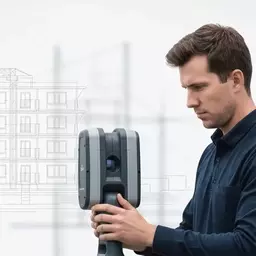
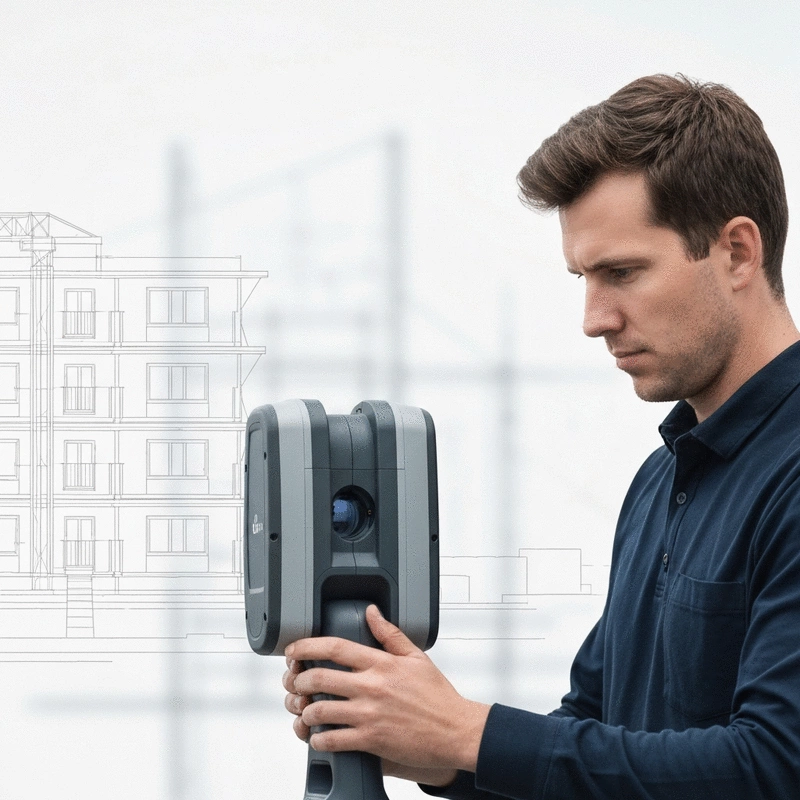
In straightforward terms, 3D laser scanning is a method that employs laser beams to capture the geometry of a physical object or space. The scanner emits laser light that reflects off surfaces and returns to the device, allowing it to calculate distances with remarkable precision. The result is a digital model that can be viewed, analyzed, and manipulated for different purposes.
This technology not only simplifies the documentation process but also aids in planning and executing construction projects with much greater accuracy.
When it comes to construction and renovation, leveraging 3D laser scanning can offer several key advantages. Here are some of the most impactful benefits:
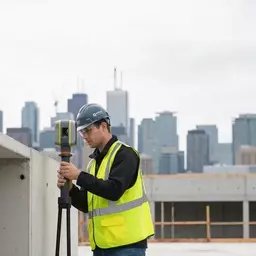
One of the first things you’ll notice when using 3D laser scanning is the speed at which you can collect data. Traditional surveying techniques can take days or even weeks, depending on the project size. In contrast, 3D laser scanning dramatically reduces this time. Imagine wrapping up data collection in just a few hours! This efficiency not only saves time but also allows for quicker project turnaround.
Another major advantage is the accuracy of the measurements. 3D laser scanners can achieve an accuracy of within a few millimeters, providing a level of detail that traditional methods struggle to match. This precision is crucial for ensuring that designs fit perfectly and that there are no costly mistakes during construction.
With the ability to capture detailed information quickly and accurately, 3D laser scanning is becoming a game changer in the AEC industry, particularly for first-time builders and renovators looking for reliable solutions to complex problems.
Now that we understand the basics and advantages of 3D laser scanning, let’s take a look at the tools and techniques that power this technology. Leading providers, such as Leica Geosystems, Faro Technologies, and Trimble, offer cutting-edge scanners that cater to different project scales and requirements.
Using these tools, professionals can create highly detailed models that support effective planning and execution of AEC projects.
How do you feel about the implementation of 3D laser scanning in your projects? Select one of the options below:
A: 3D laser scanning is a technology that uses laser beams to capture precise measurements of physical objects or environments, creating detailed 3D digital models (point clouds) of real-world structures.
A: It significantly enhances efficiency and accuracy by speeding up data collection, providing millimeter-level precision, reducing costly errors, and improving collaboration through integration with BIM systems. It also allows for capturing complex geometries that traditional methods might miss.
A: 3D laser scanners can achieve accuracy within a few millimeters, a level of detail that traditional surveying methods often struggle to match. This high precision is crucial for ensuring designs fit perfectly and minimizing construction errors.
A: Leading providers include Leica Geosystems, known for high-quality scanners; Faro Technologies, offering portable solutions for complex environments; and Trimble, which focuses on integrating scanning technology with comprehensive project management software.
A: Quality control is vital to ensure the data collected is accurate and reliable. It involves calibrating equipment, reviewing point cloud data for anomalies, and cross-verifying with traditional methods to prevent errors, save time, and ensure successful project outcomes.
As we wrap up our exploration of 3D laser scanning, it's clear that this innovative technology holds immense value for the Architecture, Engineering, and Construction (AEC) industry. By leveraging high-precision tools, professionals can capture detailed measurements that enhance project accuracy and efficiency. In a world where every detail counts, understanding this technology can lead to better decision-making and project outcomes.
Let’s take a moment to highlight some key takeaways for industry decision-makers:
These points emphasize the pivotal role that 3D laser scanning plays in modern AEC practices. It's not just about adopting new technology; it's about transforming how we approach projects from conception to completion!
Are you ready to dive into the world of 3D laser scanning? The first step is to evaluate your specific needs and determine how this technology can fit into your projects. Here’s how to get started:
Taking these steps will ensure you make informed choices that align with your project goals. Remember, understanding your options can lead to more successful outcomes!
When requesting quotes, make sure you're clear about your project requirements. Different providers may offer varying levels of service, so it’s essential to ask the right questions to assess their capabilities. Here are some factors to consider:
By asking these questions, you can gauge which providers will best meet your needs. It’s about finding a partner who will support you throughout your project journey!
Quality control is an indispensable aspect of any 3D laser scanning project. Ensuring that the data collected is accurate and reliable is critical to the success of your project. Implementing quality control measures can help catch errors early on, saving you time and money.
This involves regular checks during the scanning process and thorough review of the data outputs. Here are some key elements to keep in mind:
By prioritizing quality control, you can enhance the integrity of your project's data, leading to better decision-making and successful outcomes. Remember, in the world of AEC, precision is key!
Here is a quick recap of the important points discussed in the article:
Elena Larkin is a passionate real estate expert with a keen understanding of the challenges facing first-time buyers and young families. With years of experience in the industry, she combines her extensive knowledge of property financing, home improvement, and market trends with a relatable approach. Elena aims to empower her audience by providing insightful content designed to demystify the real estate landscape.