Sun Belt vs. Coastal Cities Investment
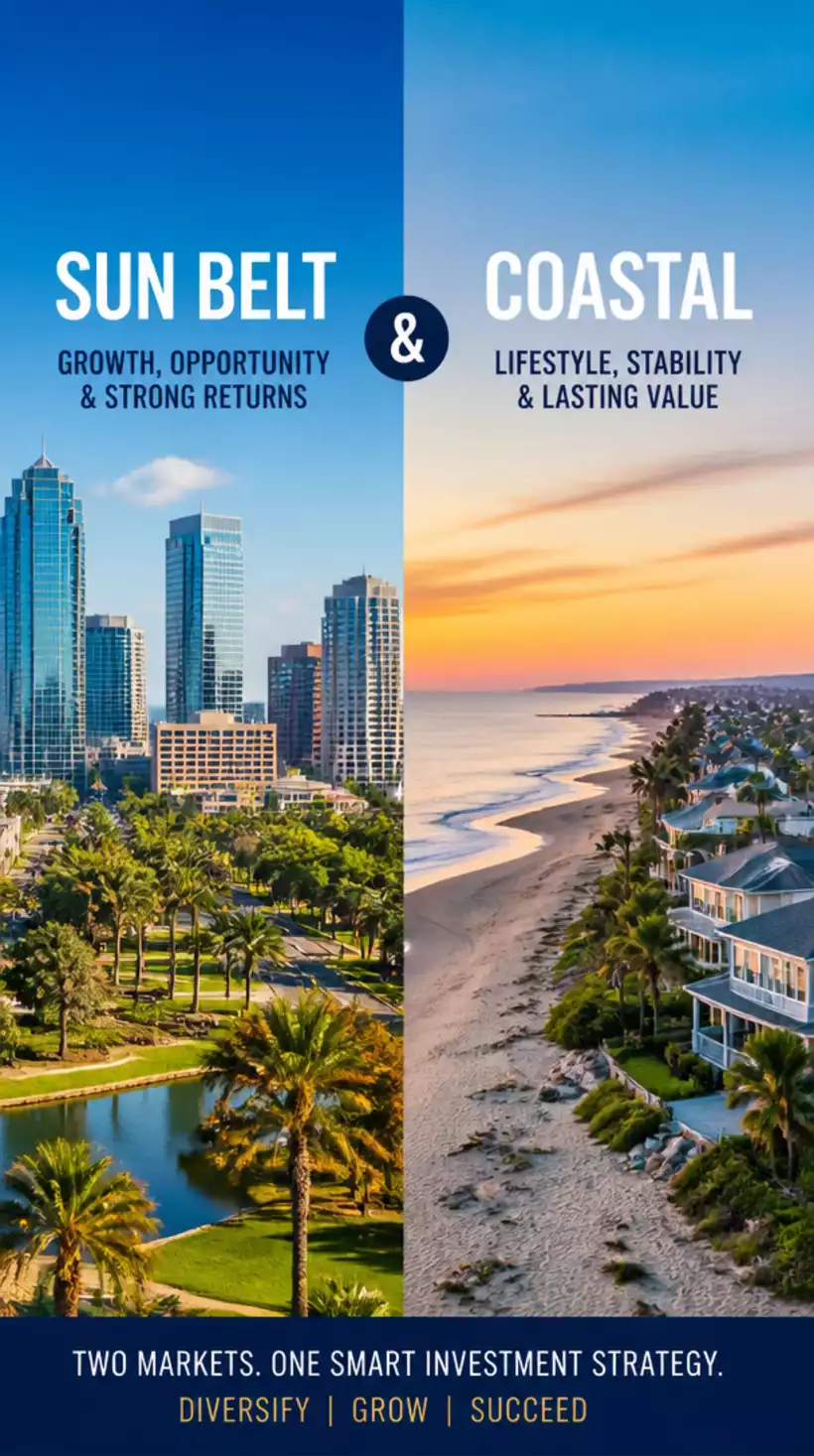
Understanding urban property investment can unlock incredible opportunities for urban professionals and aspiring investors. As you explore the differences between Sun Belt cities and coastal markets, you'll gain insights that empower your financial decisions.
What You Will Learn
- The Sun Belt's rapid economic growth and low taxes create attractive investment opportunities.
- Coastal cities offer prestige and historical value but come with higher entry costs.
- Understanding local regulations is essential for assessing risks and maximizing returns.
- Tailoring your investment strategy to align with regional strengths enhances your potential for financial success.
Urban Property Investment: Sun Belt vs. Coastal Cities
Delve into the key distinctions between investing in Sun Belt and Coastal City properties, highlighting their unique market dynamics, risk factors, and growth potential.
Sun Belt Market Dynamics
- • Rapid Population Growth
- • Robust Economic Expansion
- • Lower Taxes & Operating Costs
- • Strong Job Market Growth
Coastal Cities Market Dynamics
- • High Demand & Prestige
- • Historical Appreciation
- • Luxury Living Options
- • Market Resilience
Key Investment Factors
- • Job Growth Trends
- • Local Regulations
- • Lifestyle & Amenities
- • Economic Stability
Balancing Risk & Opportunity
- • Growth Potential (Job/Migration)
- • Market Stability (Unemployment/Affordability)
- • Regulatory Climate (Local Laws)
- • Infrastructure Investment
Understanding Urban Property Investment in the Sun Belt and Coastal Cities
Investing in urban property can be thrilling, especially when comparing Sun Belt cities with coastal areas. Each region presents unique opportunities and challenges that can significantly impact your investment strategy. With my experience at Urban Property Insights, I've seen how understanding these markets lays the groundwork for successful investments.
The Sun Belt is known for its rapid population growth and economic expansion, while coastal cities often provide a mix of prestige and market resilience. As urban professionals and aspiring investors, recognizing these differences can help you make informed decisions that align with your financial goals.
Defining the Real Estate Landscape: Sun Belt vs. Coastal Cities
- Sun Belt: Characterized by warm climates, lower taxes, and job growth.
- Coastal Cities: Known for high demand, luxury living, and historical appreciation.
- Investment Potential: Analyzing location, lifestyle amenities, and market trends is essential for making sound decisions.
Navigating these landscapes means diving into various factors that shape property values, including job opportunities, demographic shifts, and economic stability. As you explore these markets, consider how personal lifestyle preferences align with investment objectives.
Reader Intent: What Investors Want to Know
When it comes to investing, I often hear questions like, "Which location will provide the best return?" or "How do I assess the risks involved?" Understanding what investors truly care about helps tailor my insights to better serve you. Whether it's maximizing cash flow or ensuring long-term appreciation, knowing the landscape is vital.
- What are the job growth trends in the target area?
- How do local regulations impact investment returns?
- What amenities and lifestyle factors attract tenants?
By addressing these inquiries, we can uncover key insights that will enhance your investment strategy. Keep these questions in mind as we move forward, and let’s delve deeper into the factors that influence property investment decisions.
Key Factors Influencing Property Investment Decisions
As we explore the key factors influencing property investment decisions, it’s essential to recognize that both the Sun Belt and coastal cities present distinct opportunities. Each region's dynamics will shape your approach, so let's break them down to better understand how they can impact your choices moving forward.
Pro Tip
When investing in urban properties, always consider the long-term impact of local infrastructure projects. Areas undergoing improvements, such as new public transport systems or commercial developments, often see a significant increase in property values. Staying ahead of these trends can position you well for future gains!
Frequently Asked Questions About Urban Property Investment
- What are the primary advantages of investing in Sun Belt cities?
- Sun Belt cities offer rapid population growth, robust economic expansion, lower taxes, and strong job market growth, making them attractive for investors seeking growth potential. According to research from the Bush Center, many people and businesses are still moving to America's most growth-friendly metro areas, mostly in the Sun Belt.
- What makes coastal cities appealing for urban property investment?
- Coastal cities are known for high demand, prestige, historical appreciation, luxury living options, and market resilience, often appealing to investors focused on stability and long-term value.
- How do local regulations influence property investment returns?
- Local regulations, including zoning laws, building codes, and rental policies, can significantly impact investment returns by affecting development costs, property management, and potential profitability.
- What key factors should investors consider when comparing the Sun Belt and coastal markets?
- Investors should consider job growth trends, local regulations, lifestyle and amenities, and overall economic stability. Furthermore, understanding the housing affordability crisis and its impact on supply is crucial for making informed decisions.
- Why is infrastructure investment important for urban property values?
- Infrastructure investments, such as improved transportation networks, new community amenities (parks, schools), and economic development projects, typically increase property desirability and can lead to significant increases in property values. The Harvard Kennedy School's Taubman Center has conducted extensive research on urban infrastructure and its impact on regional growth.
Summarizing Investment Insights from Sun Belt and Coastal Markets
As we wrap up our exploration of urban property investment, it’s important to grasp the core insights that can guide your investment decisions in both Sun Belt and coastal markets. Each region presents unique opportunities and challenges, and understanding them is vital for any urban professional or aspiring investor. So, what are the key takeaways for you?
- Market Dynamics: The Sun Belt continues to attract investors due to its rapid economic growth and population influx.
- Coastal Prestige: Coastal cities maintain their appeal with historical value and resilience, albeit with higher entry costs.
- Risk Awareness: Both regions have specific risks, including climate factors in the Sun Belt and market saturation in coastal cities.
- Investment Strategy: Tailoring your approach based on regional strengths can optimize your returns.
As an urban property analyst, I've seen firsthand how these insights empower investors to make informed decisions. By focusing on market indicators and aligning them with your investment goals, you can navigate the complexities of urban real estate more effectively!
Balancing Risk and Opportunity: A Dual Market Perspective
When considering investments in urban properties, it’s crucial to find a balance between risk and opportunity. Each market presents its own set of circumstances that can either enhance or hinder your investment potential. Here are some factors to weigh:
- Growth Potential: Assessing job growth and migration trends can reveal where demand is likely to surge.
- Market Stability: Economic indicators, such as unemployment rates and housing affordability, play a key role in determining stability.
- Regulatory Climate: Understanding local laws can help you navigate risks associated with property management and investment.
In my experience with Urban Property Insights, I’ve found that investors who actively evaluate these factors tend to achieve better financial outcomes. It’s all about striking that perfect balance between seizing opportunities and mitigating risks!
Evaluating Infrastructure Investment and its Impact on Property Values
Infrastructure investment is a critical aspect of understanding urban property values. As cities develop and improve their infrastructure, property values often follow suit. Here are a few key components to consider:
- Transportation Networks: Access to public transit and major roadways can enhance property desirability.
- Community Amenities: Parks, schools, and healthcare facilities contribute to neighborhood appeal.
- Economic Development Projects: New businesses and commercial developments can increase demand for residential properties.
By evaluating these infrastructure elements, you can better predict how urban property values may rise or fall. As always, staying informed on these trends is essential for making savvy investment decisions in both the Sun Belt and coastal markets.
Next Steps for Potential Investors
Evaluating Personal Investment Objectives and Market Fit
Before diving into your investment journey, it’s essential to evaluate your personal investment objectives. Are you looking for quick cash flow, long-term appreciation, or perhaps a balance of both? Understanding your goals will help you identify which market aligns best with your vision.
- Identify Your Goals: Short-term gains vs. long-term wealth accumulation.
- Research Market Trends: Investigate which regions are experiencing growth relevant to your objectives.
- Risk Tolerance: Determine how much risk you are willing to take in pursuit of your financial goals.
At Urban Property Insights, we emphasize the importance of personalizing your investment strategy. Your unique objectives should guide your choices, leading you toward markets that align with your vision!
Building a Comprehensive Investment Strategy
Creating a comprehensive investment strategy requires careful planning and consideration of various market factors. Here’s how to structure your approach:
- Market Research: Conduct thorough research on neighborhoods that interest you.
- Networking: Engage with local real estate professionals to gain insights and build connections.
- Diverse Investments: Consider diversifying your portfolio across both the Sun Belt and coastal markets for balanced risk.
By following these steps, you can build a robust investment strategy that positions you for success. In my time as a real estate analyst, I’ve seen how a thoughtful approach can turn opportunities into substantial returns!
Understanding Buyer Demand and Seller Supply Dynamics
Finally, understanding the dynamics of buyer demand and seller supply is crucial for any investor. Recognizing how these forces interact can help you time your investments for maximum effectiveness:
- Market Conditions: Familiarize yourself with the current market conditions, including supply levels and buyer interest.
- Seasonality: Be aware that certain times of year may see fluctuations in activity.
- Competitive Landscape: Analyze your competition to find your unique value proposition.
By grasping these dynamics, you’ll be better equipped to make informed decisions that align with your investment strategy. Let’s take the next step together—your urban investment journey is just beginning!
Recap of Key Points
Here is a quick recap of the important points discussed in the article:
- Market Dynamics: The Sun Belt attracts investors due to its rapid economic growth and population influx.
- Coastal Prestige: Coastal cities maintain appeal with historical value and resilience, though they come with higher entry costs.
- Risk Awareness: Both regions have distinct risks, including climate factors in the Sun Belt and market saturation in coastal cities.
- Investment Strategy: Tailoring your approach based on regional strengths can optimize your returns.
- Infrastructure Impact: Transportation networks and community amenities significantly influence property values.
- Personal Objectives: Clearly define your investment goals to align with the suitable market for success.