Did you know that 3D laser scanners are redefining industries by enabling high-precision digital representations of the physical world? These remarkable tools not only enhance accuracy but also streamline processes across various sectors. Let’s explore the key insights you’ll gain about 3D laser scanning technology and its essential applications.
What You Will Learn
3D laser scanners capture detailed, accurate digital models of the physical world using laser beams.
Understanding the differences between laser scanners and structured light scanners can help you choose the right technology for your needs.
Lidar technology enhances 3D laser scanning by integrating GPS for georeferenced mapping, crucial for environmental and infrastructure projects.
Regular calibration and maintenance of 3D laser scanners are vital for ensuring measurement accuracy and prolonging equipment lifespan.
3D Laser Scanning Technologies: A Comparative Overview
Delve into the core differences and applications of various 3D laser scanning technologies to understand their unique strengths.
Laser Scanners vs. Structured Light Scanners
Both capture 3D data, but their methods and ideal applications differ significantly.
Laser Scanners
• Emits laser beams
• Long distances, high accuracy
• Ideal for large objects/environments
Structured Light Scanners
• Projects light patterns
• Smaller, intricate objects
• Detailed surface info
Applications of Long-Range Surveying
3D laser scanners provide critical benefits for large-scale projects.
• Conduct site surveys with extreme accuracy
• Create detailed models of existing structures
• Facilitate planning of new construction projects
The Role of Lidar in 3D Laser Scanning
Lidar enhances 3D scanning with geographic referencing.
• Environmental monitoring and assessment
• Topographic mapping and land surveying
• Infrastructure development
Understanding 3D Laser Scanners and Their Applications
Are you curious about how 3D laser scanners are transforming industries? You're not alone! These advanced tools are revolutionizing how we capture and analyze the world around us. Let’s dive into what a 3D laser scanner actually is and explore its various applications.
What is a 3D Laser Scanner?
A 3D laser scanner is a device that captures the physical world as a digital 3D model. It does this by emitting laser beams and measuring the time it takes for the light to bounce back. This technology allows for incredibly detailed and accurate representations of objects and environments. Imagine being able to create a digital twin of a building or a piece of art! According to experts at Geospatial World, this method provides unparalleled precision in data capture.
Precision measurements with high accuracy
Ability to capture complex geometries and textures
Versatile applications across multiple industries
These scanners are used in various fields, including construction, archaeology, and even medical imaging. By transforming real-world objects into digital models, they pave the way for innovative applications that enhance productivity and precision.
How Does 3D Laser Scanning Work?
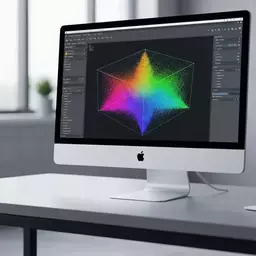
Understanding the mechanics of 3D laser scanning can help you appreciate its value. The process begins with the scanner emitting thousands of laser beams in rapid succession. Each beam hits a surface and returns to the scanner, which measures the time taken. This data is then compiled into a point cloud, representing the scanned object or environment in 3D space.
Emission of laser beams to capture data
Collection of point cloud data for 3D modeling
Processing the data using specialized software
The precision of this technology allows for detailed analysis and planning in various sectors. For instance, in construction, professionals can use these scans to ensure that projects adhere to design specifications with minimal errors. For a deeper dive into the science, ScienceDirect provides extensive information on the principles and applications of 3D laser scanning.
Comparison of 3D Laser Scanning Technologies
When exploring 3D laser scanning, it’s essential to know the different technologies available. Let’s break this down into key comparisons that can help you understand your options.
Laser Scanners vs. Structured Light Scanners
Laser scanners and structured light scanners both serve similar purposes but operate on different principles. Laser scanners use laser beams for measurement, which allows them to capture long distances with high accuracy. In contrast, structured light scanners project a series of light patterns onto an object to capture its shape. This method is often used for smaller, intricate objects, providing detailed surface information.
Applications of Long-Range Surveying
Long-range surveying with 3D laser scanners has numerous applications, particularly in civil engineering and architecture. By using this technology, professionals can:
Conduct site surveys with extreme accuracy
Create detailed models of existing structures
Facilitate the planning of new construction projects
This method not only saves time but also reduces the risk of costly mistakes in the planning stages.
The Role of Lidar in 3D Laser Scanning
Lidar technology plays a crucial role in 3D laser scanning. It combines laser scanning with GPS and inertial measurement systems to create highly accurate and georeferenced 3D maps. Lidar is particularly valuable in applications such as:
Environmental monitoring and assessment
Topographic mapping and land surveying
Infrastructure development
This technology is essential for gathering vast amounts of geographic data efficiently, empowering decision-makers in various fields. More details on Lidar's capabilities can be found on National Geographic's encyclopedia.
Frequently Asked Questions About 3D Laser Scanners
Here are some common questions to help you further understand 3D laser scanning technology:
What is a 3D laser scanner?
A 3D laser scanner is a device that captures the physical world as a digital 3D model by emitting laser beams and measuring the time it takes for the light to return, creating detailed and accurate representations of objects and environments.
How do laser scanners differ from structured light scanners?
Laser scanners use laser beams and are ideal for long distances and large objects, providing high accuracy. Structured light scanners project light patterns and are better suited for smaller, intricate objects, capturing detailed surface information.
What is Lidar and its role in 3D laser scanning?
Lidar (Light Detection and Ranging) technology combines laser scanning with GPS and inertial measurement systems to create highly accurate, georeferenced 3D maps. It is crucial for applications like environmental monitoring, topographic mapping, and infrastructure development.
Why is calibration important for 3D laser scanners?
Calibration is vital for ensuring your 3D laser scanner operates at peak performance and accuracy. Regular checks of alignment, distance measurement, and temperature adjustments prevent inconsistent measurements and costly mistakes.
What are common maintenance tips for 3D laser scanners?
Routine maintenance includes regularly cleaning the scanner's lenses, checking for firmware updates, and inspecting cables and connections to ensure long-lasting performance and prevent operational interruptions.
We Want to Hear From You!
As you consider the transformative potential of 3D laser scanners, we want to know: What industry applications excite you the most? Share your thoughts below:
Maintaining and Troubleshooting Your 3D Laser Scanner
Taking care of your 3D laser scanner is essential for achieving accurate results and extending the lifespan of your equipment. Regular maintenance not only ensures precision but also helps prevent unexpected downtime. With my experience at Modern Living Real Estate Hub, I've seen how vital it is to stay proactive with your tools. Let's explore some key components of maintaining your laser scanner!
Essential Calibration Techniques for Accuracy
Calibration is a critical process for ensuring your 3D laser scanner operates at peak performance. Here are some essential calibration techniques to consider:
Check Alignment: Regularly verify the alignment of the scanner to ensure it accurately represents the physical environment.
Distance Calibration: Test the scanner's distance measurement capabilities by using known reference points.
Temperature Adjustments: Account for temperature variations that could affect the scanner's performance and accuracy.
By implementing these techniques, you can significantly enhance your scanner's accuracy and reliability. Remember, calibration should be done frequently, especially before important projects. This way, you’ll avoid costly mistakes and ensure your scans are up to industry standards.
Common Issues and Their Resolutions
Even the best equipment can encounter issues. Here are some common problems you might face with your 3D laser scanner, along with their solutions:
Inconsistent Measurements: This could be due to improper calibration or environmental factors. Recalibrating and checking for obstacles in the scanning area can help.
Data Loss: Always ensure your software is up-to-date. If you experience data loss, check your storage and consider backing up your files regularly.
Software Compatibility: Make sure your scanning software is compatible with the device you are using. Updating software or installing necessary plugins can resolve these issues.
By being aware of these common hiccups, you can save yourself time and frustration. Don't hesitate to reach out to your provider for support if needed. It's always best to address issues promptly so they don’t escalate.
Routine Maintenance for Long-Lasting Performance
Routine maintenance is your best friend when it comes to keeping your 3D laser scanner in top condition. Here are some best practices to follow:
Clean the Lens: Regularly clean the scanner's lenses and mirrors to prevent dirt and dust from affecting your scans.
Check for Firmware Updates: Ensure that your scanner runs the latest firmware to avoid performance issues.
Inspect Cables and Connections: Regularly check and secure all cables and connections to prevent any interruptions in operation.
By following these maintenance tips, you’ll ensure your 3D laser scanner operates efficiently for years to come. Investing a little time on maintenance today can lead to significant savings and better results tomorrow!
Recap of Key Points
Here is a quick recap of the important points discussed in the article:
3D laser scanners capture detailed digital models of physical objects through laser beams.
Calibration techniques, such as checking alignment and distance measurements, are essential for accuracy.
Regular maintenance, including cleaning lenses and checking firmware, extends the lifespan of your scanner.
Lidar technology enhances 3D scanning by combining it with GPS for precise geographic mapping.
Different scanning technologies, like laser and structured light scanners, have unique applications and benefits.
Elena Larkin
Elena Larkin is a passionate real estate expert with a keen understanding of the challenges facing first-time buyers and young families. With years of experience in the industry, she combines her extensive knowledge of property financing, home improvement, and market trends with a relatable approach. Elena aims to empower her audience by providing insightful content designed to demystify the real estate landscape.
Modern Living Real Estate Hub is dedicated to empowering first-time buyers, young families, and small-scale investors. We demystify the real estate market, offering actionable insights for confident property journeys and informed decisions.
Feeling overwhelmed by your first home purchase? Start by understanding your budget! Knowing what you can truly afford is the first step to your dream home.
Don't just look at the asking price. Factor in closing costs, property taxes, and potential home improvement expenses to get a full financial picture!
Boost your home's value with smart improvements. Even small updates like a fresh coat of paint or new fixtures can make a big difference!
Research local market trends! What's the average sale price in your desired neighborhood? Are homes selling quickly? Knowledge is power.
Get pre-approved for a mortgage before you start house hunting. This shows sellers you're serious and helps you know your true buying power.
Consider the long-term potential of a property. Is it in an area with planned development? How might its value grow over the next 5-10 years?
Don't shy away from asking questions! Your real estate agent is there to guide you. No question is too small when making such a significant investment.
Think about your lifestyle when choosing a home. Is it close to schools, parks, or your favorite coffee shop? Your home should fit your life.
Understand the difference between a 'want' and a 'need' in your new home. This helps you prioritize and stay realistic during your search.
Explore different mortgage options. FHA, VA, conventional — each has unique benefits. Find the one that best suits your financial situation!
Attend open houses, even if you're not ready to buy. It's a great way to learn about different neighborhoods and what's available in your price range.
Consider a home inspection. It's a crucial step to uncover potential issues before you commit, saving you headaches and money down the road.
Don't be afraid to negotiate! Whether it's the price or repairs, a good negotiation can significantly impact your overall home-buying experience.
Start building your emergency fund early. Homeownership comes with unexpected costs, and being prepared offers peace of mind.
Ready to take the next step towards your dream home? Our resources at Modern Living Real Estate Hub are designed to guide first-time buyers and young families like yours!